Creating a beautiful garden should not mean spending every weekend watering, weeding, pruning, and replacing struggling plants. A well-planned landscape can stay attractive, healthy, and productive with far less effort when sustainability is built into the design from the beginning.
Sustainable landscape planning focuses on working with nature instead of constantly fighting against it. By choosing plants suited to local conditions, improving soil naturally, conserving water, and encouraging wildlife, homeowners can create outdoor spaces that require fewer resources while remaining vibrant throughout the seasons.
Whether you have a compact courtyard, a suburban backyard, or a large rural property, sustainable landscaping offers practical solutions that reduce maintenance, lower long-term costs, and support the environment. This guide explains the key principles, practical techniques, and design ideas that help gardens flourish year after year.
What Is Sustainable Landscape Planning?
Sustainable landscape planning is the practice of designing outdoor spaces that balance beauty, functionality, and environmental responsibility. Rather than relying heavily on irrigation, chemicals, and constant maintenance, sustainable gardens are designed to thrive naturally.
The goal is to create landscapes that:
- Use water efficiently
- Support local wildlife and pollinators
- Improve soil health
- Reduce waste
- Require less maintenance
- Stay attractive throughout every season
- Adapt well to changing weather conditions
Instead of forcing plants into unsuitable conditions, sustainable planning begins by understanding what naturally works best for the site.
Why Sustainable Gardens Make Sense
Many homeowners assume environmentally friendly landscaping requires extra work. In reality, the opposite is often true.
A properly planned sustainable garden can provide:
- Lower water bills
- Reduced mowing
- Less frequent pruning
- Fewer pest problems
- Healthier soil
- Longer plant life
- Better resilience during drought
- Improved biodiversity
- Reduced fertilizer requirements
Over time, these benefits save both money and effort while creating a healthier outdoor environment.
Start by Understanding Your Landscape
Successful landscape planning begins long before the first plant goes into the ground.
Spend time evaluating your property by considering:
Sunlight
Observe which areas receive:
- Full sun
- Partial shade
- Full shade
Different plants have very different light requirements, so placing them correctly prevents future problems.
Soil Conditions
Healthy soil forms the foundation of every sustainable garden.
Assess:
- Soil texture
- Drainage
- Organic matter
- Compaction
- Soil pH if needed
Improving soil early reduces future maintenance considerably.
Water Movement
Watch how rainwater flows through your property.
Identify:
- Areas that stay wet
- Dry zones
- Slopes
- Erosion-prone locations
- Drainage challenges
Understanding natural water movement helps you make smarter planting decisions.
Local Climate
Choose plants suited to:
- Rainfall patterns
- Seasonal temperatures
- Wind exposure
- Humidity
- Frost conditions
Gardens designed for local conditions naturally require fewer resources.
Choose Native Plants Whenever Possible
Native plants are among the most valuable elements of sustainable landscaping.
Because they evolved in the local environment, they are naturally adapted to regional conditions.
Benefits include:
- Lower watering needs
- Better pest resistance
- Reduced fertilizer use
- Improved survival rates
- Support for local birds and insects
- Greater resilience during weather extremes
Native flowering plants also provide essential food sources for bees, butterflies, and other beneficial pollinators.
Incorporate Drought-Tolerant Plants
Even in regions with moderate rainfall, drought-tolerant plants reduce irrigation needs significantly.
Many attractive options include:
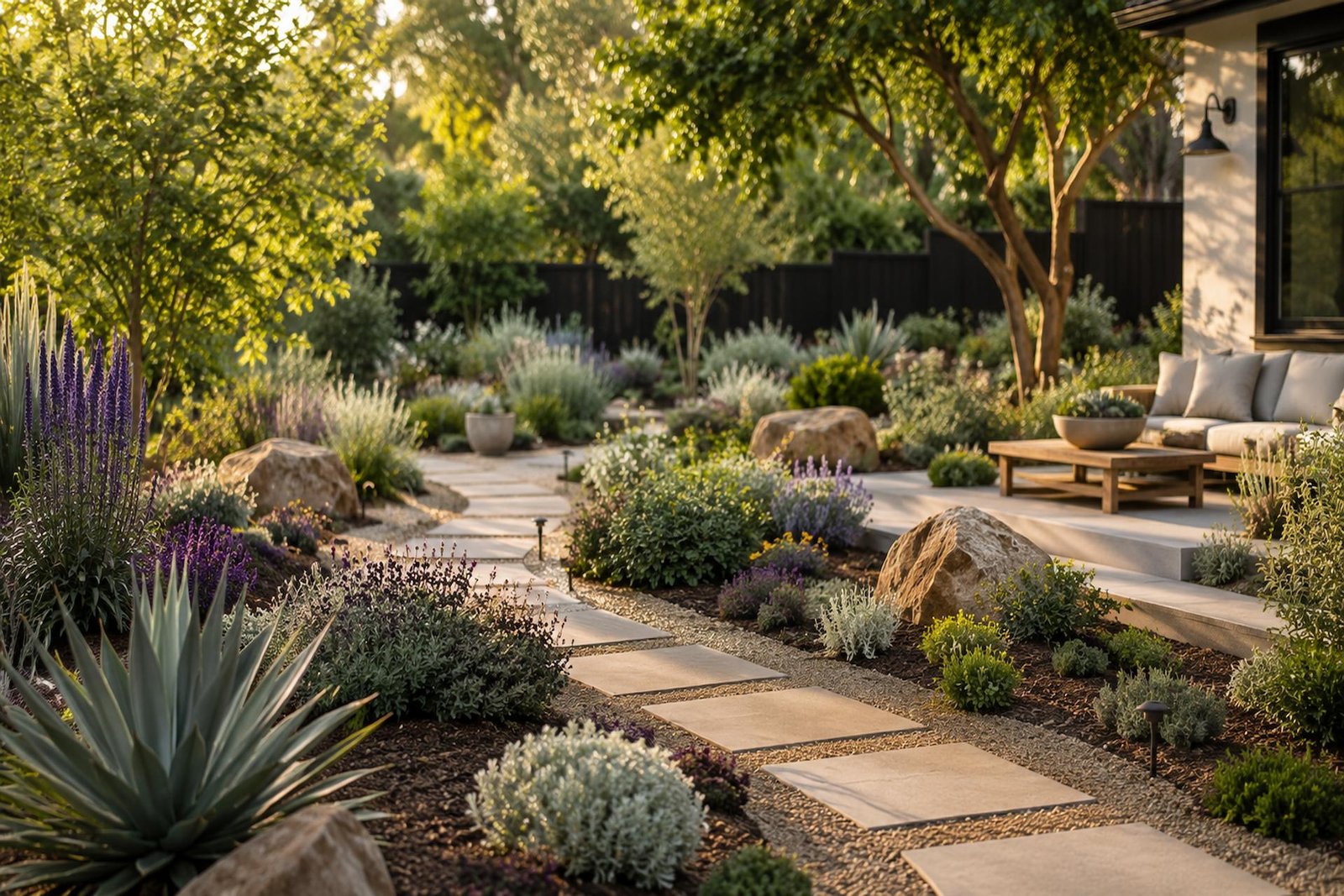
- Lavender
- Coneflowers
- Salvias
- Yarrow
- Sedum
- Russian sage
- Ornamental grasses
- Agave in suitable climates
These plants often remain attractive even during dry periods while requiring minimal care.
Design Plant Communities Instead of Individual Specimens
Natural ecosystems grow in groups rather than isolated plants.
Instead of scattering unrelated plants across the garden, group species with similar needs.
Benefits include:
- Easier watering
- Reduced maintenance
- Better visual balance
- Healthier growth
- Improved pest resistance
This approach also creates more natural-looking landscapes.
Reduce Traditional Lawn Areas
Large lawns often consume the greatest amount of water, fertilizer, fuel, and maintenance time.
Instead of covering the entire property with grass, consider alternatives such as:
- Native meadow planting
- Ground covers
- Decorative gravel gardens
- Mulched planting beds
- Clover lawns
- Ornamental grasses
- Edible gardens
- Wildflower areas
Keeping lawn only where it serves a practical purpose reduces long-term maintenance considerably.
Build Healthy Soil Naturally
Healthy soil acts like a living ecosystem.
Rather than relying on synthetic fertilizers, improve soil through natural methods.
Excellent options include:
- Compost
- Leaf mould
- Well-rotted manure
- Organic mulch
- Cover crops
- Compost tea
Healthy soil retains moisture better, supports stronger root systems, and naturally improves plant health.
Mulch Is One of the Best Investments
Mulching provides immediate and long-term benefits.
Organic mulch helps:
- Retain moisture
- Suppress weeds
- Moderate soil temperature
- Reduce erosion
- Improve soil structure
- Feed beneficial organisms
Popular mulch materials include:
- Wood chips
- Bark
- Shredded leaves
- Pine needles
- Straw
- Compost
Refresh mulch annually rather than replacing it entirely.
Water Smarter, Not More
Water conservation remains one of the biggest goals of sustainable landscaping.
Several strategies can dramatically reduce water use.
Install Drip Irrigation
Drip systems deliver water directly to plant roots.
Advantages include:
- Less evaporation
- Reduced runoff
- Lower water bills
- Healthier plants
- Fewer weeds
Water Deeply
Deep watering encourages stronger root systems than frequent shallow watering.
Plants with deeper roots tolerate drought much better.
Water Early
Morning irrigation reduces evaporation and allows foliage to dry before evening, lowering disease risks.
Harvest Rainwater
Rainwater harvesting provides free irrigation while reducing demand on municipal water supplies.
Simple options include:
- Rain barrels
- Decorative water tanks
- Underground storage systems
- Rain chains directing water into collection areas
Stored rainwater is often better for plants because it contains fewer treatment chemicals than tap water.
Create Pollinator-Friendly Gardens
Pollinators are essential for healthy ecosystems and productive gardens.
Encourage them by planting flowers that bloom throughout the growing season.
Excellent choices include:
- Bee balm
- Black-eyed Susan
- Asters
- Coreopsis
- Milkweed
- Lavender
- Sunflowers
- Native wildflowers
Avoid excessive pesticide use, which can harm beneficial insects.
Include Ornamental Grasses
Ornamental grasses provide year-round interest while requiring very little maintenance.
They offer:
- Seasonal texture
- Movement
- Winter structure
- Wildlife habitat
- Drought tolerance
Many varieties only need annual trimming in late winter or early spring.
Grow Edible Plants Alongside Ornamentals
Food-producing gardens can also be highly decorative.
Consider mixing:
- Herbs
- Fruit trees
- Berry shrubs
- Leafy greens
- Edible flowers
- Vegetable beds
This approach increases garden productivity while reducing grocery costs.
Compost Garden Waste
Instead of throwing away leaves, grass clippings, and plant trimmings, compost them.
Finished compost improves:
- Soil fertility
- Moisture retention
- Soil structure
- Beneficial microbial activity
Home composting also reduces landfill waste.
Prevent Soil Erosion Naturally
Slopes and exposed soil are vulnerable to erosion.
Reduce erosion by:
- Planting deep-rooted vegetation
- Installing ground covers
- Using mulch
- Creating terraces where appropriate
- Adding retaining walls if necessary
Protecting soil helps preserve nutrients while preventing runoff.
Encourage Biodiversity
A healthy landscape supports a wide variety of living organisms.
Increase biodiversity by including:
- Trees
- Shrubs
- Perennials
- Annual flowers
- Native grasses
- Bird-friendly plants
- Pollinator gardens
- Water sources
- Nesting areas
Greater biodiversity creates stronger, more resilient ecosystems.
Use Environmentally Friendly Hardscaping
Sustainable landscaping extends beyond plants.
Choose durable, environmentally responsible materials whenever possible.
Examples include:
- Permeable paving
- Recycled stone
- Reclaimed timber
- Local stone
- Recycled bricks
- Gravel pathways
Permeable surfaces reduce runoff while allowing rainwater to recharge the soil.
Plan for Every Season
Low-maintenance gardens should remain attractive throughout the year.
Include plants that provide seasonal interest through:
Spring
- Bulbs
- Blossoms
- Fresh foliage
Summer
- Flowering perennials
- Ornamental grasses
- Pollinator plants
Autumn
- Colourful foliage
- Seed heads
- Decorative berries
Winter
- Evergreen shrubs
- Architectural branches
- Winter grasses
- Bark colour
Seasonal planning keeps the garden visually interesting without requiring constant redesign.
Common Landscaping Mistakes to Avoid
Many maintenance problems begin with poor planning.
Avoid these common mistakes:
- Choosing plants that are unsuitable for the climate
- Overcrowding planting beds
- Installing oversized lawns
- Ignoring soil quality
- Watering too frequently
- Using excessive fertilizer
- Planting without considering mature size
- Removing beneficial insects
- Neglecting mulch
- Failing to plan for drainage
Preventing these mistakes saves years of unnecessary work.
Budget-Friendly Sustainable Upgrades
You do not need a complete landscape renovation to make meaningful improvements.
Affordable ideas include:
- Adding compost each year
- Installing mulch
- Planting native flowers
- Replacing sections of lawn gradually
- Starting a compost bin
- Installing a rain barrel
- Dividing existing perennials
- Using drought-tolerant plants
- Creating pollinator beds
Small changes made consistently often deliver impressive long-term results.
Premium Eco-Friendly Landscape Features
For larger projects, consider long-term sustainable investments such as:
- Smart irrigation systems
- Rain gardens
- Green roofs
- Living walls
- Permeable driveways
- Underground rainwater storage
- Solar-powered landscape lighting
- Natural swimming ponds
- Wildlife habitats
- Professionally designed native landscapes
Although these features require higher initial investment, they often provide decades of environmental and financial benefits.
Real-World Example: A Low-Maintenance Garden Transformation
Imagine a homeowner with a large, water-hungry lawn that requires weekly mowing, frequent fertilizing, and daily summer watering.
Instead of replacing everything at once, they gradually reduce the lawn area, install native shrubs, add ornamental grasses, create mulched planting beds, and introduce a drip irrigation system supplied by rainwater collection.
Within a few seasons, water use drops significantly. The garden attracts birds and butterflies, weeds become easier to manage, maintenance time is reduced, and seasonal colour improves naturally. Rather than working harder to keep the garden alive, the homeowner enjoys a landscape that supports itself more effectively.
This gradual approach demonstrates that sustainable landscaping is achievable without a complete redesign or an unlimited budget.
Frequently Asked Questions
How can I make my garden more sustainable?
Start by improving soil health, choosing native plants, reducing lawn areas, using mulch, conserving water, and composting organic waste. Small improvements can make a significant long-term difference.
Are sustainable gardens expensive to create?
Not necessarily. Many sustainable practices, such as composting, mulching, and planting native species, are affordable. While some features require an upfront investment, they often reduce maintenance and operating costs over time.
Do native plants always require less maintenance?
Native plants are generally well adapted to local conditions, which often means they need less water, fertilizer, and pest control once established. However, they still benefit from proper planting and occasional care.
Can sustainable landscaping work in small gardens?
Absolutely. Compact gardens can include native plants, pollinator flowers, rainwater collection, edible planting, and efficient irrigation systems. Even small changes can improve sustainability and reduce maintenance.
What is the best way to reduce water use in a landscape?
Combine drought-tolerant plants, organic mulch, drip irrigation, healthy soil, and rainwater harvesting. These strategies work together to help plants thrive while using significantly less water.
Conclusion
Sustainable landscape planning is not about sacrificing beauty for practicality. It is about creating outdoor spaces that work in harmony with nature while reducing maintenance, conserving resources, and supporting healthy ecosystems. By selecting the right plants, improving soil naturally, managing water wisely, and designing with long-term resilience in mind, homeowners can enjoy gardens that remain vibrant throughout every season with less effort and lower ongoing costs.
Whether you begin by planting a few native flowers, replacing part of your lawn with drought-tolerant planting, or investing in efficient irrigation and rainwater harvesting, every step contributes to a healthier landscape. Over time, these thoughtful choices create gardens that are not only easier to maintain but also more welcoming to wildlife, more resilient to changing weather, and more enjoyable for everyone who spends time in them.