Installing a new air conditioner is one of the most important investments you can make for your home’s comfort. While many homeowners focus on the price of the equipment itself, the total installation cost depends on much more than the unit you choose. Factors such as your home’s size, the type of system, installation requirements, and the condition of your existing HVAC equipment all play a role in the final price. If you’re planning air conditioner installation Perry, GA, understanding these factors can help you plan your budget and make informed decisions.
Every home has different cooling needs, which means there isn’t a single price that fits every installation. A professional HVAC contractor will evaluate your home’s layout, cooling requirements, and existing system before recommending the right solution. Knowing what influences installation costs can help you understand where your investment is going and why choosing the right system matters in the long run.
Why Installation Costs Can Vary
Many homeowners are surprised when they receive different estimates for air conditioner installation. That’s because every property presents unique challenges. A newer home with existing ductwork may require less labor than an older home that needs additional upgrades or modifications.
The quality of the installation also plays a significant role. Proper sizing, professional installation, and careful testing help ensure the system operates efficiently for many years. Choosing the lowest price without considering installation quality can sometimes lead to higher repair and operating costs later.
1. The Size of Your Home
One of the biggest factors affecting installation cost is the size of your home. Larger homes require air conditioners with greater cooling capacity, while smaller homes need less powerful systems. Installing equipment that is too large or too small can reduce efficiency and create comfort problems.
HVAC professionals calculate your home’s cooling requirements instead of simply recommending the biggest unit available. They consider several details before selecting the correct system.
Factors included in the sizing process include:
- Total square footage
- Ceiling height
- Number of windows
- Quality of insulation
- Local climate conditions
- Amount of direct sunlight the home receives
A properly sized air conditioner provides balanced cooling while helping reduce unnecessary energy use.
2. The Type of Air Conditioning System
Not every home uses the same type of cooling equipment. The system you choose has a direct impact on installation costs because different systems require different materials, labor, and installation methods.
Some common options include:
- Central air conditioning systems
- Ductless mini-split systems
- Heat pump systems
- Packaged HVAC units
Each system offers different benefits depending on your home’s design, existing ductwork, and comfort needs. A professional can explain which option best fits your home and budget.
3. Existing Ductwork Condition
If your home already has ductwork, its condition will influence the overall installation cost. Older ducts may have leaks, poor insulation, or damaged sections that reduce airflow and energy efficiency. Installing a new air conditioner without addressing these issues may limit the system’s performance.
In some cases, only minor duct repairs are needed. In others, replacing part or all of the duct system provides better airflow and long-term efficiency. Although this increases the initial investment, it often improves comfort and reduces wasted energy.
4. Energy Efficiency Ratings
Air conditioners are available in different efficiency levels, typically measured by their SEER2 rating. Higher-efficiency systems generally cost more upfront, but they often consume less electricity over time.
Choosing an energy-efficient system can provide several long-term advantages:
- Lower monthly utility bills
- More consistent indoor temperatures
- Reduced energy consumption
- Less strain on HVAC equipment
- Potential long-term savings over the system’s lifespan
Rather than focusing only on the purchase price, many homeowners consider the balance between upfront cost and future operating expenses.
5. Installation Complexity
No two installations are exactly alike. Some homes allow for a straightforward replacement, while others require additional labor due to limited access, electrical upgrades, or modifications to the existing HVAC system.
Older homes may need extra work to meet current building standards or improve airflow. These additional steps increase installation time but help ensure the system operates safely and efficiently after installation.
6. Additional Equipment and Accessories
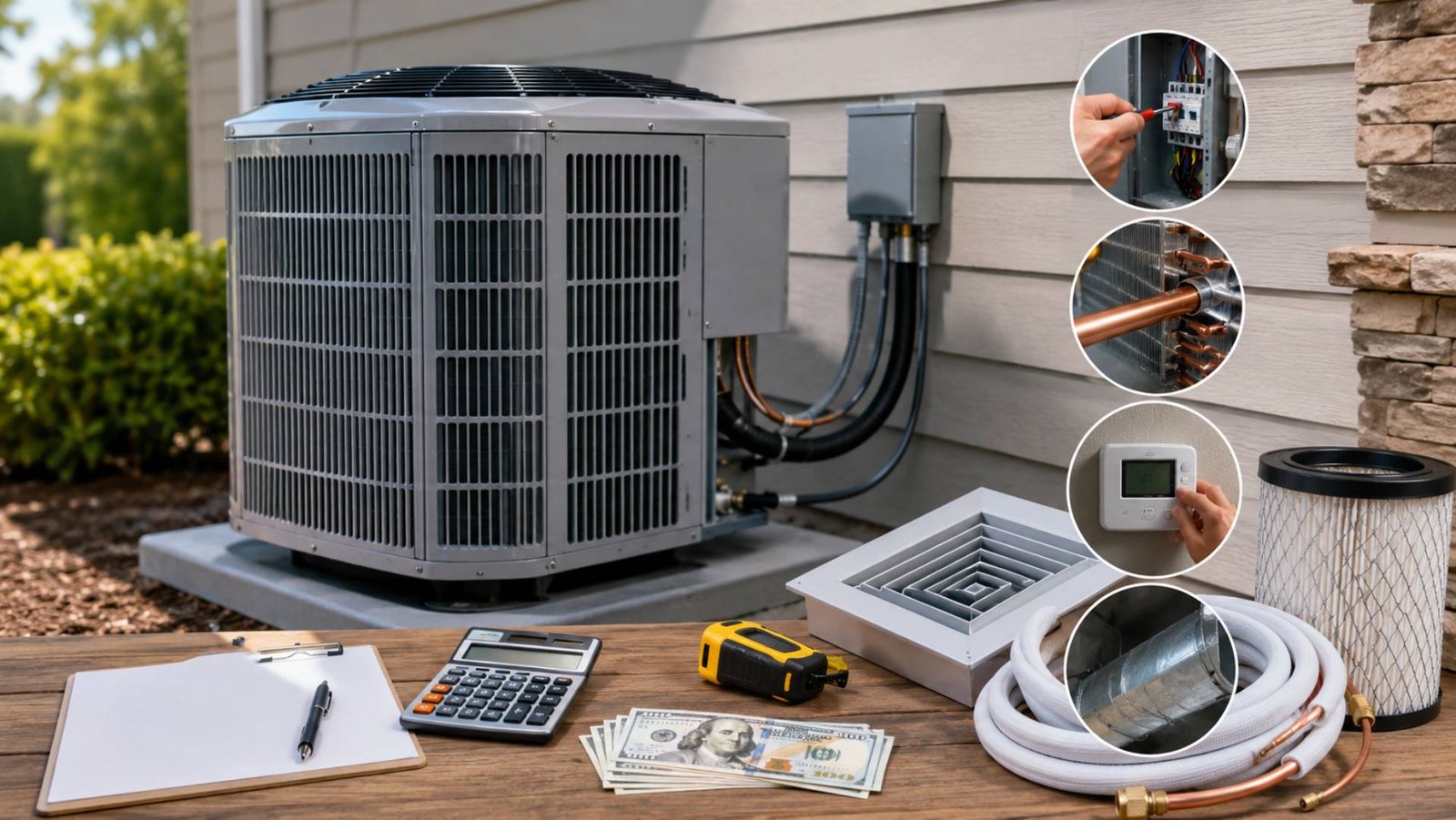
A new air conditioner sometimes requires more than just replacing the outdoor unit. Depending on the condition of your current system, your contractor may recommend replacing other components to improve performance and reliability.
Additional items may include:
- Smart thermostats
- Indoor evaporator coils
- Refrigerant line replacement
- Drainage improvements
- Electrical upgrades
- Air quality accessories
Not every installation requires these upgrades, but adding compatible components can improve system performance and help avoid future problems.
7. Professional Installation Makes a Difference
Even the highest-quality air conditioner cannot perform properly if it is installed incorrectly. Professional installation ensures the equipment is correctly sized, safely connected, properly charged with refrigerant, and thoroughly tested before it begins operating.
Experienced HVAC technicians also verify airflow, inspect electrical connections, and confirm that the entire system is functioning as designed. Investing in quality installation helps improve efficiency, reduces the likelihood of future repairs, and supports the manufacturer’s performance expectations.
Tips for Planning Your Air Conditioner Installation
Preparing for a new installation can make the entire process smoother and help you make confident decisions. Before choosing a system, it’s helpful to understand both your home’s cooling needs and your long-term goals.
A few helpful tips include:
- Schedule an in-home HVAC evaluation.
- Compare efficiency ratings, not just purchase prices.
- Ask whether your existing ductwork should be inspected.
- Consider future energy savings when selecting a system.
- Discuss warranty coverage and maintenance recommendations.
- Choose an experienced HVAC contractor for installation.
Final Thoughts
The cost of installing a new air conditioner depends on far more than the equipment itself. Home size, system type, ductwork condition, energy efficiency, installation complexity, and additional components all contribute to the final investment. Understanding these factors helps homeowners make informed decisions instead of focusing only on the initial price.
A properly selected and professionally installed air conditioning system provides reliable comfort, improved efficiency, and dependable performance for many years. By working with a qualified HVAC professional and choosing the right equipment for your home’s specific needs, you can enjoy better indoor comfort while making a smart long-term investment.