A properly installed boiler can provide steady, comfortable heat throughout the colder months while helping a household manage energy use. However, efficiency depends on more than the equipment itself. Correct sizing, suitable controls, well-maintained pipework, and careful installation all influence how effectively a boiler heats a home.
For homeowners planning boiler installation in Waterloo, IA, preparing in advance can make the process more straightforward and help avoid common problems. Understanding your home’s heating requirements, comparing suitable systems, and arranging professional installation are important steps toward dependable performance and long-term comfort.
Choose the Right Boiler for Your Home
The first step is selecting a boiler that matches your property’s heating requirements. A unit that is too small may struggle to maintain comfortable temperatures during cold weather. An oversized boiler can cycle on and off more frequently than necessary, potentially reducing efficiency and increasing wear on components.
A professional heating assessment should consider the home’s floor area, insulation, window quality, ceiling height, and the number of rooms being heated. The existing heating system also matters, particularly if the boiler supplies hot water to radiators or an underfloor heating system.
Homeowners should discuss their daily heating needs, preferred temperature settings, and available fuel sources before choosing equipment. The goal is to select a system that provides sufficient heat without unnecessary energy consumption.
Compare Boiler Types and Efficiency Ratings
Different boilers suit different properties, so understanding the available options helps homeowners make a more informed decision. Gas boilers are common where a suitable gas supply is available, while other systems may be appropriate depending on fuel access, existing infrastructure, and household requirements.
Efficiency ratings offer a useful starting point when comparing models. A higher-efficiency boiler generally converts more of its fuel into usable heat, although actual performance depends on installation quality, operating conditions, and maintenance.
Consider the equipment’s purchase and installation costs alongside expected running costs, maintenance requirements, and the availability of replacement parts. An inexpensive unit may not be the most economical choice over its working life, while a higher-priced model should be evaluated on its practical benefits rather than its rating alone.
Also, ask whether the proposed boiler is compatible with your existing radiators, piping, thermostat, and hot-water arrangements. Compatibility can affect installation complexity and the overall suitability of the system.
Check the Existing Heating System Before Installation
Replacing a boiler provides an opportunity to assess the rest of the heating system. Installing new equipment without addressing existing problems may limit its performance, even if the boiler itself is efficient.
Radiators should be checked for uneven heating, corrosion, trapped air, and signs of leakage. Pipework, valves, and connections should also be inspected for damage or deterioration. If the system contains accumulated sludge or debris, a qualified technician can determine whether cleaning or flushing is appropriate.
Insulation deserves attention as well. Poorly insulated walls, attics, and exposed pipes can allow heat to escape, making it harder to maintain comfortable indoor temperatures. Addressing these issues can complement the benefits of an efficient boiler.
Homeowners should also consider whether the existing thermostat provides adequate control. An outdated or poorly positioned thermostat may cause unnecessary heating or uneven comfort. A compatible replacement or upgraded control system may help regulate temperatures more effectively.
Prepare the Installation Area and Essential Connections
Before installation begins, confirm that the proposed boiler location provides suitable access for servicing and complies with applicable safety requirements. The installer should assess the space, ventilation requirements where applicable, flue arrangements, drainage, and necessary clearances.
Gas, electrical, and water connections must be suitable for the selected equipment. Any modifications should be completed by appropriately qualified professionals in accordance with local codes and manufacturer instructions.
Discuss the installation plan before work starts, including the removal of the existing boiler, any necessary pipework changes, and how the system will be tested afterward. Clear communication helps homeowners understand the work involved and identify potential complications before installation day.
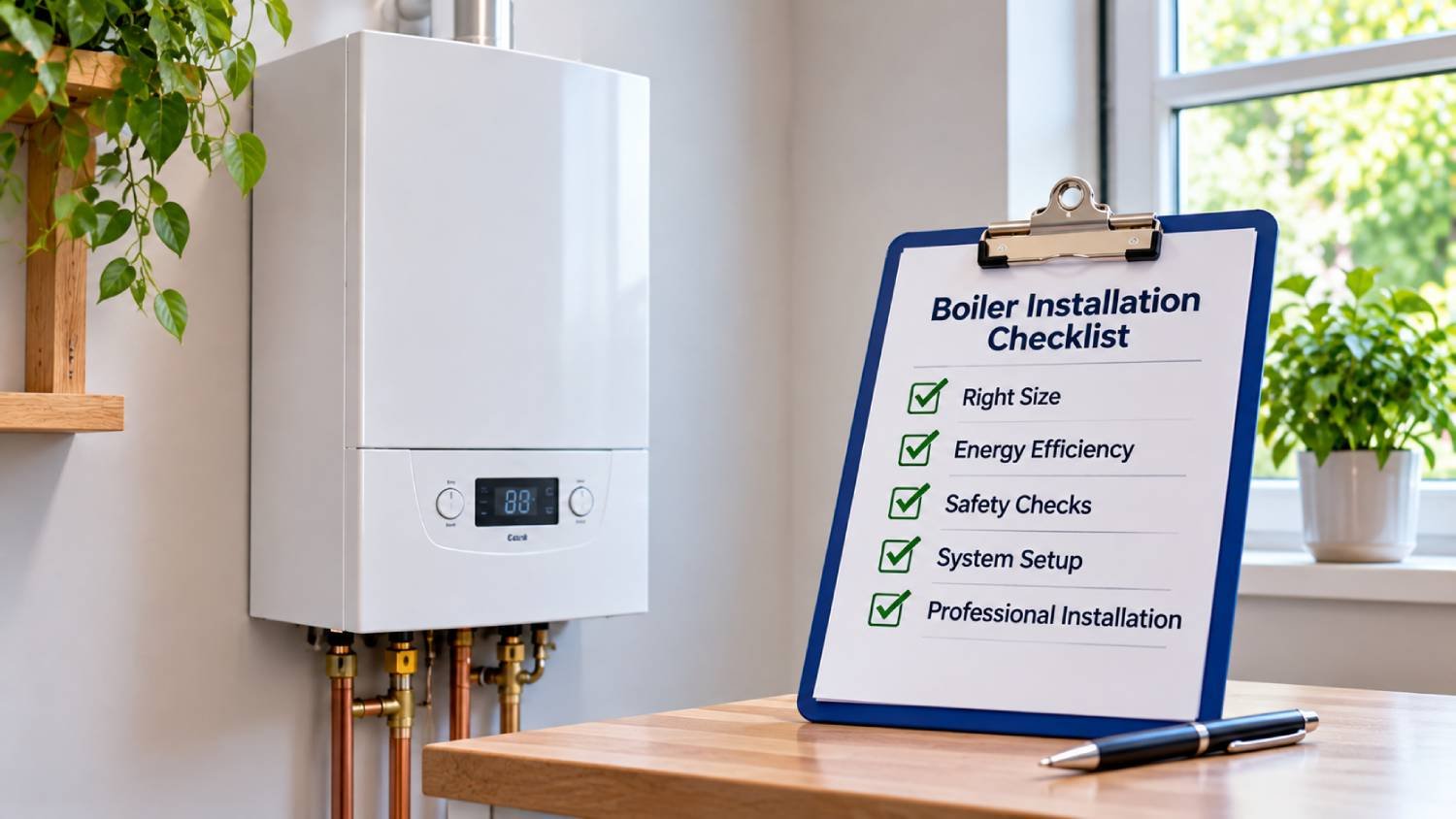
Use This Boiler Installation Checklist
Before approving the installation, review the following practical steps with your heating contractor:
- Confirm the heating assessment: Ensure the recommended boiler size reflects the home’s actual heating requirements rather than relying solely on the old unit’s capacity.
- Review equipment efficiency: Compare efficiency ratings, fuel requirements, expected operating costs, and maintenance needs.
- Check system compatibility: Confirm that radiators, pipework, controls, and hot-water arrangements will work correctly with the new boiler.
- Discuss safety and code compliance: Verify that gas connections, electrical work, venting, and other installation requirements will be handled appropriately.
- Request a clear written estimate: Understand the equipment, labor, required modifications, removal of the old unit, and any additional charges included in the proposed work.
- Confirm testing and handover: Ask whether the installer will check system operation, verify safety, explain the controls, and provide relevant documentation.
Working through this checklist helps homeowners compare proposals on practical considerations instead of focusing on the equipment price alone.
Ensure Correct Setup and System Testing
Professional installation is essential for reliable boiler operation. Even suitable equipment can perform poorly if it is incorrectly connected, configured, or integrated with the existing heating system.
After installation, the contractor should carry out the checks and commissioning procedures required by the manufacturer and applicable regulations. These may include verifying operating pressure, checking connections for leaks, testing safety controls, and confirming that the boiler operates as intended.
The heating system should also be checked for effective heat distribution. Radiators or other heat emitters may need balancing so that rooms receive appropriate amounts of heat. Correct settings can help reduce unnecessary energy use and improve comfort throughout the property.
Before the installer leaves, ask how to adjust the thermostat, set heating schedules, recognize warning indicators, and respond to common operating issues. Keep the installation paperwork, warranty information, and maintenance recommendations in a convenient location.
Maintain the Boiler for Long-Term Efficiency
A new boiler still requires routine care. Regular maintenance helps identify developing faults, supports safe operation, and allows the system to continue performing as intended.
Arrange professional servicing according to the manufacturer’s recommendations and applicable requirements. A technician can inspect key components, check system pressure and controls, identify leaks, and assess whether cleaning or adjustments are needed.
Between service visits, homeowners should monitor the system for unusual noises, inconsistent heating, visible leaks, or unexplained changes in energy consumption. These signs do not always indicate a major fault, but they warrant investigation if they persist.
Avoid opening the boiler casing or attempting repairs involving gas, electrical components, or internal mechanisms. These tasks should be left to qualified professionals. If a carbon monoxide alarm sounds, leave the property and contact emergency services or the appropriate local emergency provider. Do not re-enter until it is safe.
Frequently Asked Questions
Q.1 What is the most important factor when installing a new boiler?
Correct sizing is essential. The boiler should match the property’s heating demand, insulation, and existing distribution system. A professional assessment helps prevent problems associated with insufficient or excessive capacity.
Q.2 Does a high-efficiency boiler automatically reduce energy bills?
Not necessarily. A high-efficiency model can reduce fuel waste, but actual savings depend on the previous system, energy prices, installation quality, thermostat settings, insulation, and household heating habits.
Q.3 Can an existing radiator system work with a new boiler?
Often, yes, but compatibility should be checked. The installer may need to assess radiator capacity, pipework condition, system cleanliness, and operating requirements before confirming whether modifications are necessary.
Q.4 How often should a boiler receive professional maintenance?
Follow the manufacturer’s servicing schedule and applicable local requirements. Annual servicing is a common recommendation, although the appropriate interval depends on the equipment and its operating conditions.
Q.5 When should a homeowner consider replacing an existing boiler?
Frequent breakdowns, persistent heating problems, leaks, declining performance, or difficulty obtaining replacement parts may justify considering replacement. A qualified technician can assess whether repair or replacement is the more practical option.
In Summary
Reliable boiler performance starts with selecting appropriately sized equipment, checking the existing heating system, and ensuring that installation and testing meet applicable requirements. Insulation, effective controls, and properly balanced heat distribution also contribute to household comfort and energy efficiency.
Before proceeding, compare written estimates, discuss compatibility and safety requirements, and confirm what testing and documentation the installer will provide. After installation, follow the recommended maintenance schedule and address unusual operating symptoms promptly to support dependable heating over time.